The Role of Music and Movement in Early Brain and Motor Development
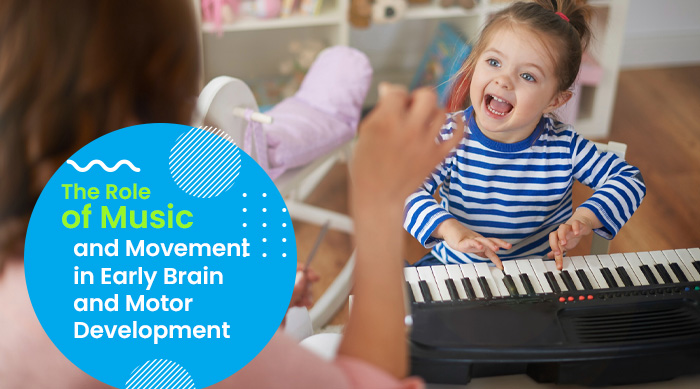
Watch a toddler the moment a catchy tune plays—their knees bounce, their arms swing, and their entire face lights up. This natural, joyful response to sound and rhythm is far more than just adorable entertainment. In early childhood education, music and movement serve as a powerful engine driving rapid neural, physical, and cognitive development.
Across early learning environments in Australia, intentional music and movement programmes play a vital role in building the brain architecture and physical coordination children need for lifelong learning.
The Neuroscience of Rhythm: How Music Builds the Early Brain
During the first five years of life, a child’s brain forms over one million new neural connections every single second. Music provides a rare, all-encompassing workout for this rapidly growing brain.
When a child engages with music, multiple areas of the brain light up simultaneously:
- Auditory Processing: Distinguishing between pitches, rhythms, and sounds lays the foundation for language acquisition, phonological awareness, and early literacy.
- Spatial-Temporal Reasoning: Understanding patterns, beats, and sequences directly supports early numeracy and mathematical concepts later in school.
- Emotional Regulation: Rhythms and gentle melodies help regulate the nervous system, reducing stress and helping children learn self-soothing strategies.
When early childhood educators sing nursery rhymes, beat drums, or play ambient sounds, they are actively strengthening the neural pathways responsible for communication, focus, and memory.
Developing Motor Skills: Swaying, Clapping, and Jumping
Movement and music are naturally inseparable for young children. Integrating structured and freeform movement into daily routines accelerates both gross and fine motor skill progression.
Gross Motor Mastery
Large-body movements—such as jumping to a fast tempo, marching like dinosaurs, or balancing while frozen in musical statues—build core strength, balance, spatial awareness, and body coordination. These activities teach children where their bodies exist in space relative to others, an essential skill for safe physical play.
Fine Motor Precision
Fingerplay songs like “Incy Wincy Spider” or handling small instruments like shakers, maracas, and triangles requires precise finger control and hand-eye coordination. These fine motor movements directly strengthen the hand muscles necessary for holding pencils, using scissors, and writing in primary school.
Nurturing Social and Emotional Skills Through Collective Play
Music is a universal connector. Participating in group music and movement sessions fosters a deep sense of community and belonging within early learning environments.
- Turn-Taking and Cooperation: Passing an instrument around a circle or waiting for the “freeze” signal teaches self-regulation and impulse control.
- Shared Joy and Empathy: Singing together releases endorphins and oxytocin, helping children feel secure, connected, and emotionally supported by their peers and educators.
- Confidence and Expression: Unstructured, creative dance allows children to express complex emotions that they may not yet have the vocabulary to put into words.
Integrating Music and Movement into Everyday Routines
The beauty of music and movement lies in its versatility. Early childhood programmes successfully embed music across the entire day:
- Transition Times: Upbeat songs make packing up toys or moving between indoors and outdoors smooth and engaging.
- Mindful Rest: Calming instrumental tunes or soft lullabies help soothe toddlers during rest and quiet time.
- Storytelling Integration: Using sound effects and rhythmic chants brings children’s literature to life, enhancing comprehension and attention spans.
Supporting Every Child’s Developmental Journey
A rich, intentional music and movement curriculum ensures every toddler and preschooler receives the sensory, physical, and neural foundation required for a smooth transition into school. By nurturing early development through play, rhythm, and active movement, early learning programmes inspire a lifelong love for learning and discovery.