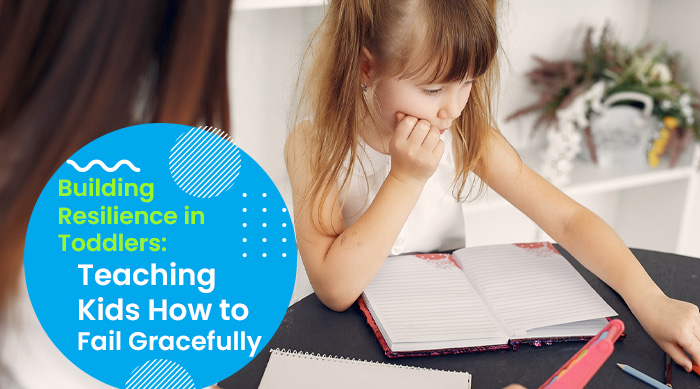
Building Resilience in Toddlers: Teaching Kids How to Fail Gracefully
A toddler tries to stack their fourth wooden block, only for the whole tower to tumble down. Within seconds, the block gets tossed across the room, followed by a full-blown meltdown.
If you have ever witnessed a moment like this at home, you are far from alone. Early childhood is full of big emotions, and learning that things do not always go as planned is one of the hardest lessons a young mind can tackle.
Across Australian early learning framework standards, fostering emotional confidence and problem-solving skills is considered a crucial milestone for early development. Helping young children handle everyday setbacks—builds the foundation for lifelong resilience.
Here is why teaching toddlers how to “fail gracefully” matters and how parents and early educators can work together to guide them through it.
Why Is Resilience So Critical in Early Childhood?
Resilience is not something children are simply born with; it is a skill that develops through practice, emotional safety, and adult guidance. In the early years, toddlers are discovering their independence while their self-regulation skills are still developing.
When toddlers face small obstacles and learn to recover, several important things happen:
- Emotional regulation improves: Children learn that experiencing frustration is not a disaster but a temporary feeling that passes.
- Problem-solving skills grow: Instead of giving up immediately, toddlers begin to try new approaches when a task gets tricky.
- Confidence builds naturally: True self-esteem does not come from constant praise; it comes from overcoming challenges independently.
- Social relationships strengthen: Learning to take turns, share, and lose a game gracefully helps children build positive friendships in group care environments.
5 Practical Strategies to Help Toddlers Fail Gracefully
1. Reframe Mistakes as Learning Opportunities
When a tower falls or a drawing does not turn out as intended, respond with curiosity rather than pity or frustration. Use language that highlights progress rather than perfection.
Try saying: “That tower was super tall! I wonder what happens if we make the base wider next time?”
Avoid: “Oh no! Don’t worry, let me do it for you.”
Stepping in too quickly deprives toddlers of the chance to work through difficulty. Give them time to attempt a solution on their own before offering a gentle hand.
2. Model Healthy Reactions to Everyday Blunders
Toddlers are constantly watching the adults around them. When you spill a drop of milk, drop your keys, or misplace something, let your child see how you handle small frustrations calmly.
- Say out loud: “Oops! I dropped my cup. That’s okay, I’ll just grab a cloth and wipe it up.”
Showing that adults make mistakes—and handle them without anger or anxiety—teaches toddlers that mistakes are simply a normal part of life.
3. Focus on Process, Not Just Outcome
Praise effort, persistence, and creative thinking rather than the final result. When children are praised only for being “smart” or “winning,” they can become fearful of trying tasks where success isn’t guaranteed.
Highlighting traits like trying again, asking for help appropriately, or staying calm when a puzzle piece doesn’t fit builds a growth mindset from an early age.
4. Label and Validate Big Emotions
Feeling upset when something goes wrong is a natural human reaction. Telling a toddler to “stop crying” or “it’s not a big deal” can make them feel misunderstood.
Instead, name the emotion first, then guide them towards recovery:
“You’re feeling really frustrated because that puzzle piece didn’t fit. It’s okay to feel upset. Let’s take a deep breath together and try one more time.”
5. Encourage Play That Involves Trial and Error
Certain play activities naturally encourage trial, error, and persistence. Providing opportunities for open-ended play helps toddlers build tolerance for minor setbacks in a safe environment.
Great resilience-building activities include:
- Building blocks and magnetic tiles: Constructing structures that occasionally fall over teaches cause and effect.
- Water and sand play: Experimenting with pouring, filling, and spilling builds spatial awareness and patience.
- Simple obstacles and movement play: Navigating balance beams or climbing equipment builds physical resilience and perseverance.
How Quality Australian Early Learning Centres Support Resilience
In high-quality Australian early childhood education and care settings, resilience building is integrated into everyday routines and play-based learning programmes.
Educators working under the Early Years Learning Framework (EYLF) actively support Outcome 1: Children have a strong sense of identity, and Outcome 3: Children have a strong sense of wellbeing. Through structured group play, social interactions, and guided problem-solving, early learning centres give children a safe, supportive space to explore, take risks, fail, try again, and celebrate their growth.
Partnering for Your Child’s Growth
Building resilience does not happen overnight. It is a continuous journey made up of small daily interactions at home and in care. By allowing toddlers the freedom to make mistakes and supporting them with empathy, we give them the courage to keep trying.
If you are looking for an early learning centre in your local community that prioritises emotional development, social competence, and resilience alongside cognitive learning, reach out to schedule a tour today. Together, we can help your child step confidently into every new challenge.