Supporting Dual-Language Learners in Early Childhood
In Australia’s vibrant, multicultural society, over 300 languages are spoken in homes across the nation. For many families, enrolling a child in an early childhood service is not just a milestone—it is often their child’s first step into an English-speaking environment.
Parents often wonder if introducing English alongside their home language will cause confusion or delay their child’s speech. In reality, early childhood is the ideal window for language acquisition. Nurturing a child’s native language while introducing English actually builds cognitive strength, social resilience, and academic confidence.
Why the Home Language Is the Key to English Success
A common myth in early education is that families should switch to speaking English at home once their child starts childcare or preschool. Research shows the exact opposite: a strong foundation in a child’s first language directly supports their ability to learn a second.
- Cognitive Flexibility: Multilingual children develop higher-order executive function skills earlier. Switching between languages trains the brain to solve problems, focus attention, and process information efficiently.
- Literacy Concept Transfer: Concepts learned in a native language—such as understanding that words carry meaning or that stories have beginnings and ends—transfer seamlessly to English.
- Emotional Security and Identity: Language connects a child to their family, heritage, and identity. When a child feels their culture and language are valued, their self-esteem flourishes, creating a secure base from which to explore a new language.
How Australian Early Learning Centres Support Dual-Language Learners
Australia’s Early Years Learning Framework (EYLF V2.0) emphasises belonging, Being and Becoming, highlighting Respect for Diversity and Cultural Responsiveness as central principles of quality practice. Skilled early childhood educators apply several intentional strategies to support dual-language development during play:
1. Creating Language-Rich Play Environments
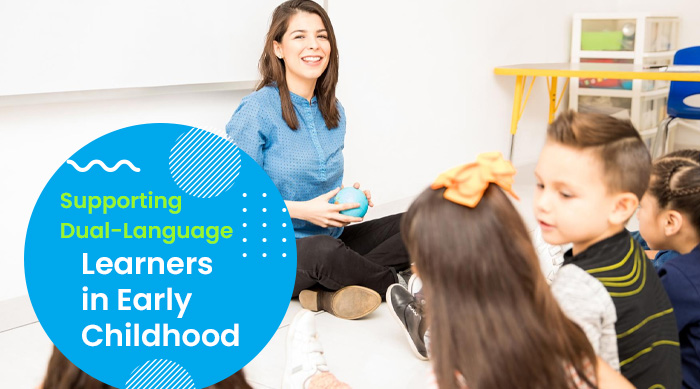
Educators use visual cues, real-life props, gestures, and facial expressions during play-based experiences. Labels accompanied by clear photographs, picture cards, and storybooks in multiple languages allow children to connect meaning across both environments.
2. Valuing and Embedding Home Languages
Inclusive early learning services actively integrate children’s native languages into daily routines. This includes incorporating songs, stories, and greetings from home cultures into group times, as well as inviting family members to share key words and traditions.
3. Embracing the “Silent Phase”
It is entirely normal for dual-language learners to observe quietly for weeks or months when first entering an English-speaking environment. Educators respect this crucial processing phase, offering warm, responsive interactions without pressuring the child to speak before they feel ready.
4. Supporting Strategic “Code-Switching”
Children learning two languages often mix words from both tongues within a single sentence. Rather than correcting this, educators recognise code-switching moments as sophisticated linguistic problem-solving as the child bridges their expanding vocabularies.
Simple Ways Families Can Support Dual-Language Learning at Home
Parent partnership is essential for successful language development. Here is how you can support your child’s growth at home:
- Keep Speaking Your Home Language: Continue using your native language naturally at home during dinner, bedtime stories, and daily outings. Deep, rich conversation in your native tongue provides the strongest cognitive foundation for learning English.
- Share Key Words with Educators: Provide your childcare centre with a list of essential words in your home language—such as “water,” “toilet,” “help,” “hungry,” or comfort terms—to help educators support your child’s immediate needs.
- Read and Tell Stories Daily: Read picture books in your home language and discuss the illustrations together. Pointing to pictures and building descriptive vocabulary supports overall literacy development.
- Celebrate Your Culture: Share family traditions, songs, and food with your early childhood community. When your child sees their culture celebrated at their centre, it reinforces their sense of belonging.
Embracing the Journey
Learning two or more languages is a superpower, not a hurdle. By partnering with dedicated early learning educators who value every child’s linguistic background, you give your child a strong foundation in both English and their home language—setting them up for lifelong learning success.